Retail has always been shaped by change, but in 2026, the pace and precision of that change are unmistakable. Advances in artificial intelligence are redefining how merchandising decisions are made—shifting the discipline from intuition and hindsight to predictive, real-time intelligence.
For enterprise retailers, AI-powered merchandising is no longer about experimentation. It is about execution. The ability to translate data-driven insights into accurate, consistent in-store experiences is now a defining factor in retail performance.
At its core, the goal remains unchanged: make stores easier to shop, easier to navigate, and easier to maintain. AI is simply accelerating how those outcomes are identified and raising the stakes for those responsible for delivering them.
Quick Summary:
AI-powered merchandising is reshaping retail in 2026 by enabling real-time, data-driven decisions across product placement, pricing, inventory, and store execution. While AI excels at identifying opportunities, value is only realized when those insights are accurately executed at the store level. The most successful retailers treat AI as a decision-support tool—combining predictive intelligence with disciplined physical merchandising, human judgment, and operational rigor.
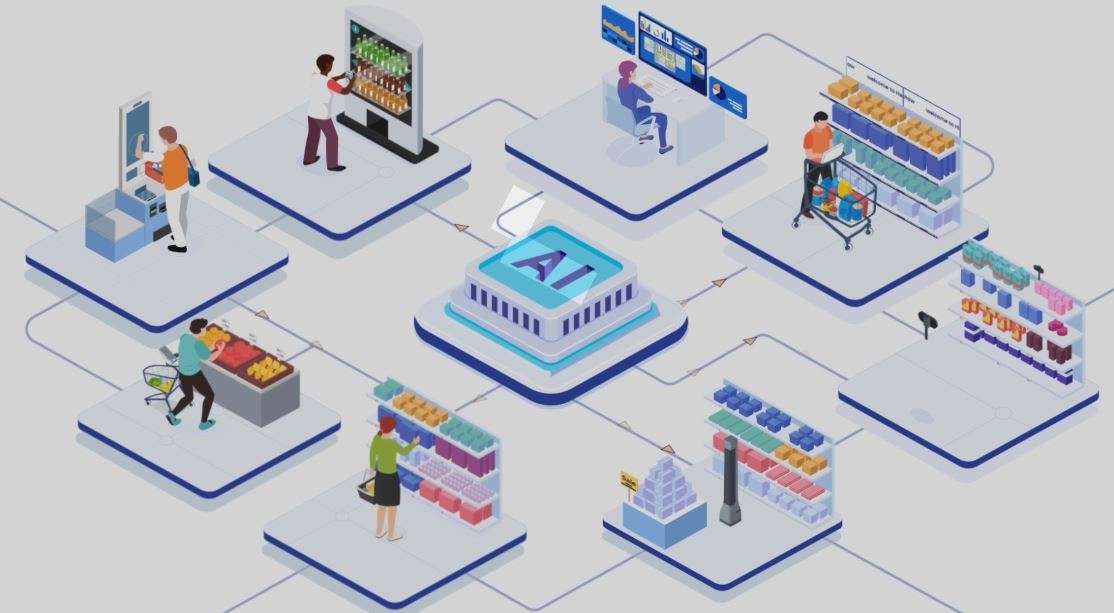
What Is AI-Powered Merchandising in Retail?
AI-powered merchandising refers to the use of machine learning and advanced analytics to guide merchandising decisions using live data rather than static rules. Unlike traditional approaches that rely heavily on historical performance and manual analysis, AI continuously evaluates signals such as shopper behavior, inventory movement, pricing sensitivity, and in-store conditions.
This allows retailers to determine what products should be stocked, where they should be placed, and how they should be presented, based on what is happening now, not what happened last season.
Importantly, AI does not replace merchants or field teams. Instead, it enhances decision-making by shifting merchandising from a reactive process to a proactive, data-driven discipline supported by human oversight.
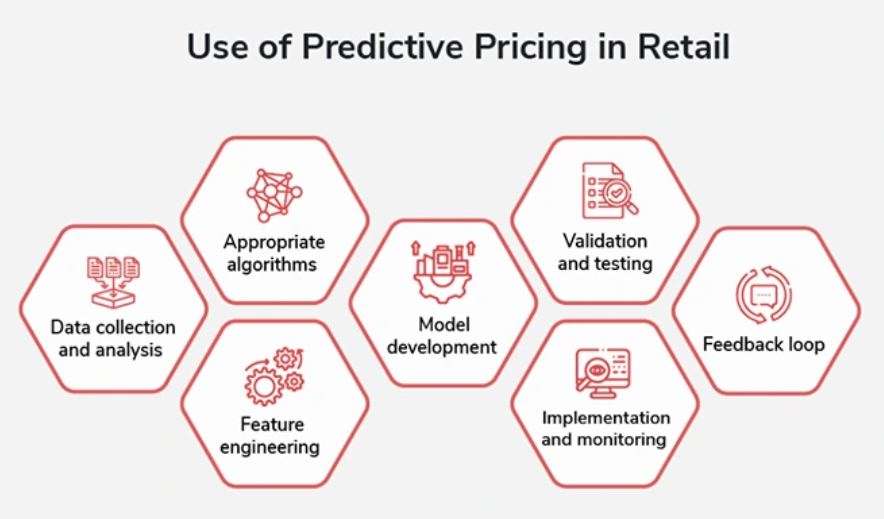
Why AI-Powered Merchandising Is Essential for Retailers in 2026
Retailers today operate in an environment defined by heightened customer expectations, persistent labor constraints, and ongoing pressure on margins. One-size-fits-all merchandising strategies are no longer viable across diverse formats, regions, and channels.
In 2026, AI-powered merchandising has moved from competitive advantage to operational baseline. Retailers increasingly rely on AI to:
- Personalize product discovery across digital and physical environments.
- Adjust pricing and promotions dynamically based on demand and sell-through.
- Optimize inventory availability at the SKU and location level.
- Respond faster to changing shopper behavior and market conditions.
However, insights alone do not drive results. Their value depends entirely on accurate execution inside the store.
How AI Is Reshaping Physical Retail Merchandising Execution
While AI is often associated with digital channels, its impact on physical retail merchandising is becoming increasingly significant. Predictive intelligence is now shaping decisions related to shelf layout, planogram design, and store flow.
In-Store Intelligence, Computer Vision, and Shelf Compliance
Retailers are leveraging computer vision and in-store analytics to monitor shelf compliance, identify out-of-stocks, and detect misplaced products in near real time. Layouts and fixture configurations are no longer guided solely by intuition, they are validated and refined through data.
When analytics reveal that a layout, planogram, or category is underperforming, physical execution becomes the critical next step. AI identifies opportunity, but store resets, fixture adjustments, and merchandising rollouts are what convert insight into measurable performance.
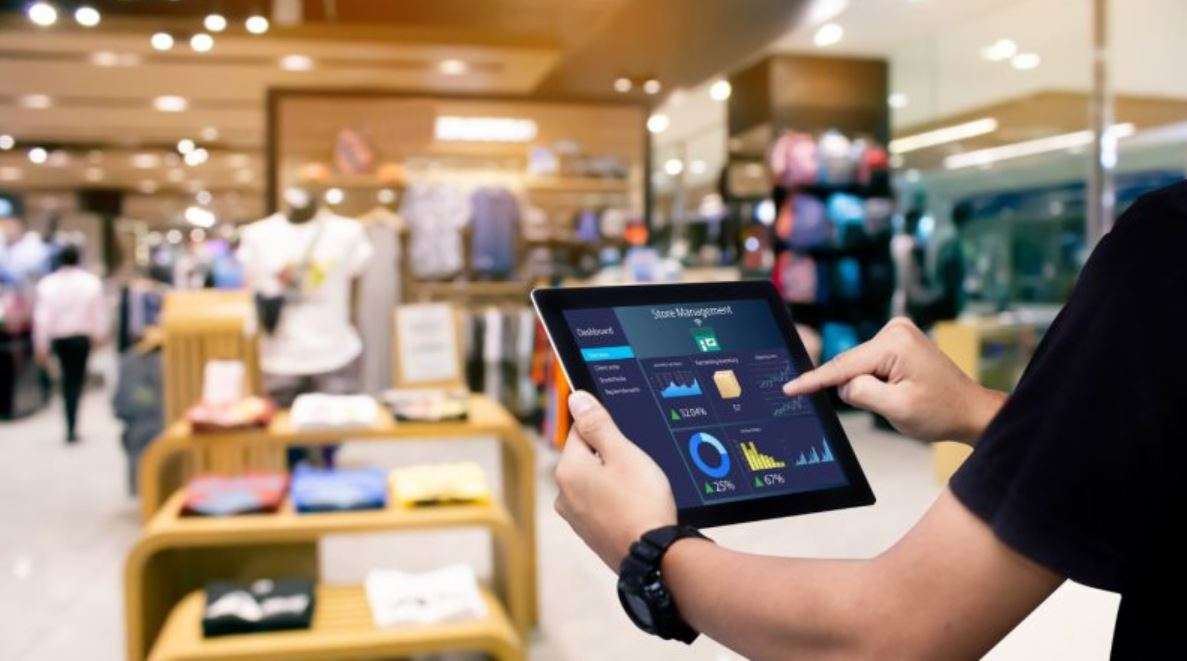
How AI Connects Digital Merchandising Strategy to the Physical Store
AI-driven search, recommendations, and promotional engines increasingly influence what shoppers expect to find in-store. If a product is being highlighted online, the physical environment must reinforce that promise.
This requires alignment across fixtures, signage, inventory placement, and promotional execution. When digital strategy and physical merchandising fall out of sync, friction is introduced and customer trust erodes.
Modern merchandising execution ensures that physical stores reflect the same priorities defined by AI-driven digital insights, delivering a consistent and cohesive customer experience across channels.
Why Human Judgment Still Matters in AI-Powered Merchandising
Despite its advantages, AI-powered merchandising is not a set-and-forget solution. Over-automation without oversight introduces operational, safety, and reputational risk.
Successful retailers treat AI as a decision-support tool, not a replacement for experience or accountability. Just as field teams require training, certification, and safety protocols, AI systems require governance, validation, and human judgment.
Technology may define the optimal path forward, but skilled professionals are still required to execute it accurately, safely, and at scale.
Executing AI-Informed Merchandising at Scale
The future of retail merchandising sits at the intersection of predictive intelligence and disciplined physical execution. Even the most advanced algorithm cannot install fixtures, reset gondolas, or execute a national point-of-purchase rollout.
That is where execution becomes the differentiator.
Whether retailers are planning store resets informed by predictive analytics or nationwide rollouts designed to optimize performance in 2026, success depends on experienced teams capable of translating insight into action.
AI defines what should happen. Execution determines whether it does.

Ready to Execute AI-Powered Merchandising in Your Stores?
AI-powered merchandising can identify where retailers should act—but performance only improves when those insights are executed accurately on the sales floor.
If your merchandising strategy is increasingly informed by predictive analytics, computer vision, or AI-driven recommendations, your physical execution must keep pace. Store resets, fixture adjustments, planogram changes, and national rollouts require experienced teams that can deliver safely, consistently, and at scale.
The Reset Team specializes in translating AI-driven merchandising insights into real-world retail execution. From targeted store resets to nationwide rollouts, our teams ensure that data-backed decisions are implemented with precision—so intelligence turns into measurable results.
Contact The Reset Team today to discuss how we can support your next phase of AI-informed merchandising execution and help your stores perform at their best in 2026 and beyond.
Frequently Asked Questions (FAQs)
What is AI-powered merchandising in retail?
AI-powered merchandising is the use of machine learning and real-time data to guide retail decisions such as product placement, pricing, inventory levels, and store layouts. It helps retailers respond to current shopper behavior instead of relying only on historical trends.
How does AI-powered merchandising improve retail performance?
AI-powered merchandising improves retail performance by increasing conversion rates, reducing stockouts and overstocks, optimizing pricing and promotions, and ensuring products are placed where they are most likely to sell—both online and in-store.
Does AI-powered merchandising replace human merchandisers?
No. AI-powered merchandising supports human merchandisers by providing faster and more accurate insights. Human judgment is still essential for execution, safety, compliance, and adapting insights to real-world store conditions.
Why is physical execution critical to AI-powered merchandising?
AI insights only create value when they are executed correctly at the store level. Without accurate shelf resets, fixture placement, signage, and inventory execution, AI-driven recommendations remain theoretical and do not impact sales.
How does AI connect digital merchandising to the physical store?
AI connects digital and physical merchandising by aligning online promotions, search results, and recommendations with in-store product placement, signage, and inventory availability. This creates a consistent customer experience across all channels.
What role does computer vision play in retail merchandising?
Computer vision allows retailers to monitor shelf compliance, detect out-of-stocks, identify misplaced products, and validate planograms in near real time. It provides visibility into store conditions that were previously difficult to measure at scale.
Is AI-powered merchandising only for large retailers?
While enterprise retailers often adopt AI-powered merchandising first due to scale and data volume, mid-sized retailers can also benefit—especially those managing multiple locations, complex assortments, or omnichannel operations.
How does The Reset Team support AI-powered merchandising strategies?
The Reset Team supports AI-powered merchandising by executing store resets, retail rollouts, and physical merchandising initiatives that turn data-driven insights into consistent, in-store results at scale.